 Making a Home
 A Community in Conflict
 Working for a Living
 Farming in the Great Corn Belt
 Abraham Lincoln in McLean County
Entertaining the Crowds
Arthur Wilson “Bob” Tucker (1914-2006) quit school at the age of 15. Enthralled by the pulp fiction stories he read in Dime Detective, Weird Tales, and Amazing Stories magazines, Bob convinced himself that he could write stories just as good as those he was reading.
Bob began churning out his own 5,000-word stories while working as an apprentice projectionist at the old Front Street Theater.
His job was to set up the reels of film on the theater’s projector. When the film broke, as it often did, he had to repair it quickly. He also replaced burned out projection bulbs and switched reels when needed.
When things were running smoothly, he could work on his writing.
Bob (using the name Wilson Tucker) tried for many years, but didn’t sell his first story, Interstellar Way-Station, until 1941. By then he was working as a projectionist at Bloomington’s Ewing Theater.

Bob Tucker
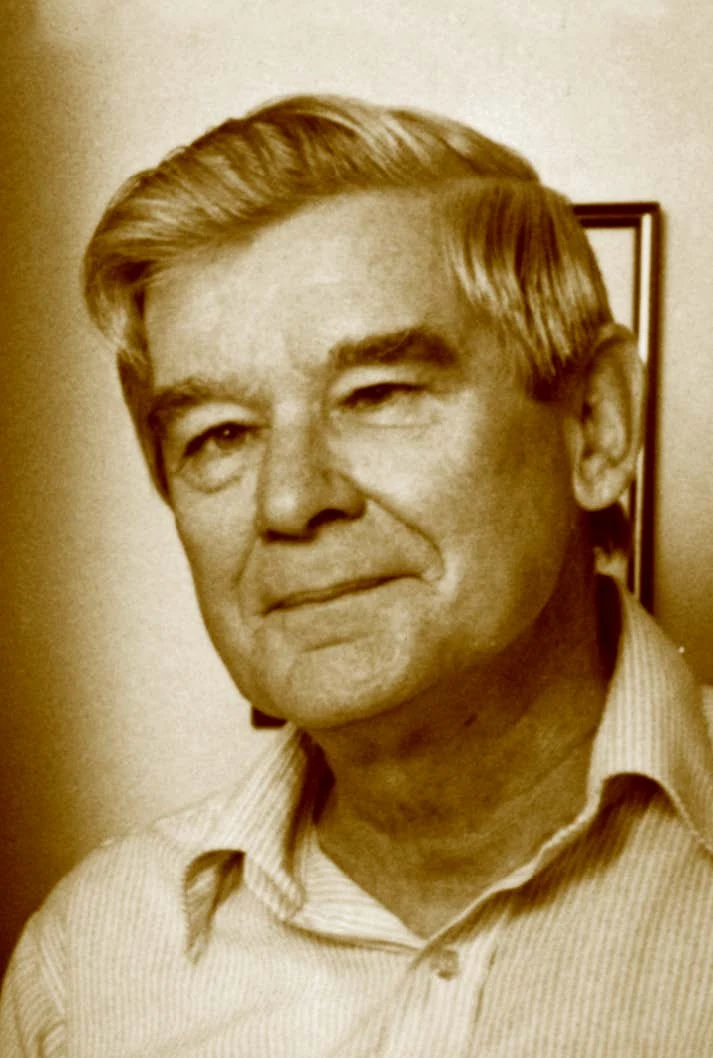
Bob continued to work as a movie projectionist until 1972, and published his last book, Ice and Iron, in 1974.
Considered by many to be the founder of science fiction writing, Bob was inducted into the Science Fiction and Fantasy Hall of Fame in 2003.
Charles "Old Hoss" Radbourn
America’s favorite pastime once featured a local pitcher who helped his team win the first “world series” in baseball.
Born in New York, Charles “Old Hoss” Radbourn (1854-1897) arrived in Bloomington as an infant. He grew up playing baseball, and worked in his father’s butcher shop and on the railroad, before his first game with the Bloomington Juniors in 1869. Hoss was recruited into the National League in 1880.
From 1880 to 1891 Hoss played for five different major league teams, his longest stint being with the Providence (Rhode Island) Grays. When the Grays’ only other pitcher suddenly walked off the field in the middle of an 1884 game, Hoss (at the time suspended for inappropriate behavior) agreed to pitch the year’s remaining games on the condition that he receive the other pitcher’s pay on top of his own.

Charles "Old Hoss" Radbourn
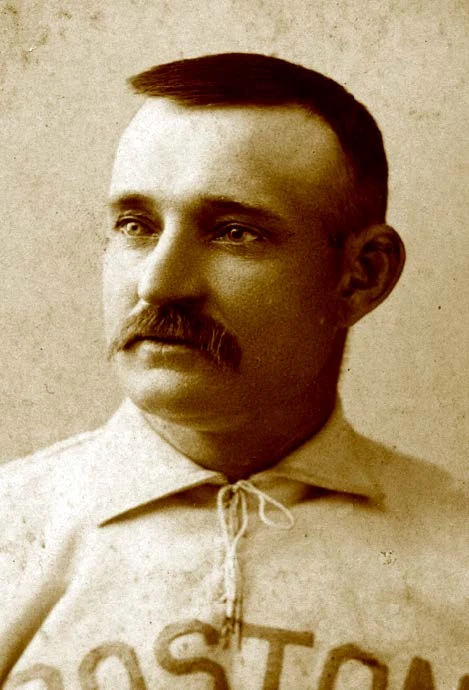
Despite his arm being so weakened by overuse that he could barely comb his hair, Hoss pitched 73 games, winning 59, tying two, and losing only 12. This included winning the first World Championship Series against the New York Metropolitans.
One hundred and thirty-two years later, in 2017, this winning record for a single season still held.
Hoss was one of the first players to effectively utilize the curveball, which he mastered by practicing against the family barn on West Washington Street.
He was inducted into the National Baseball Hall of Fame in 1939.
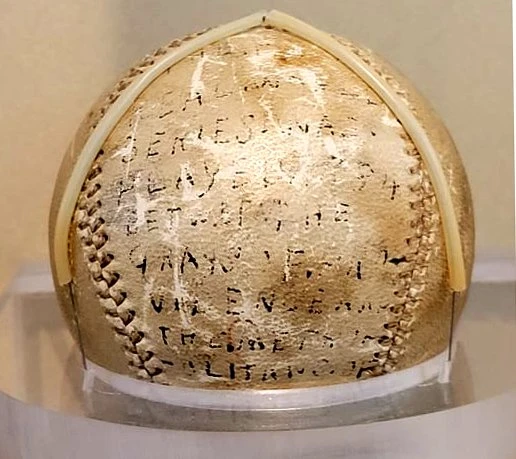
World Championship Series baseball, circa 1884

Charles "Old Hoss" Radbourn used this baseball when he pitched three straight victories for the Providence Grays over the New York Metropolitans to win the first World Championship Series in 1884.
Donated by: Ralph Clouse
2002.17
Cane/fishing pole, circa 1890

View this object in Matterport
In his free time, Hoss liked to go fishing. A fan made this elaborately carved cane for him. Inside is a telescoping bamboo fishing pole.
Courtesy of: John Addison Van Ness
727.136

Hoss finished his baseball career with the Cincinnati Reds in 1891.
He returned to Bloomington where he opened a saloon and billiards parlor at 215 W. Washington Street.
Saloon token, circa 1890
Hoss referred to his saloon as “Baseball Headquarters.” He had this embossed on his saloon token.
Donated by: Clarendon Kinsey
828.277